TITP (Technical Intern Training Program)
What is Technical Intern Training Program (TITP)?
The Technical Intern Training Program (TITP) was initiated in Japan back in 1993 with the aim of supporting developing countries by hosting their citizens and imparting skills through On-the-Job Training (OJT). This program serves as a platform for international cooperation, facilitating the transfer of skills, techniques, and knowledge gained by technical interns to their home countries. By doing so, it not only enhances human resource development but also contributes to the economic growth of these regions.
In alignment with India's ambition to become the skill capital of the world, the Ministry of Skill Development and Entrepreneurship (MSDE), Government of India, has undertaken various measures to bolster skill development initiatives. One significant step in this direction was the signing of a Memorandum of Cooperation (MoC) with Japan's Ministry of Justice, Ministry of Foreign Affairs, and Ministry of Health, Labour and Welfare on October 17, 2017. This MoC aims to substantially enhance bilateral cooperation between India and Japan in the field of skill development.
Under this collaborative program, individuals from India are selected to undergo internships lasting three to five years in Japan. Upon completion of their internships, they are required to return to India and apply the skills they have acquired during their time in Japan. To oversee the implementation of this program, the MSDE appointed the National Skill Development Corporation (NSDC) in January 2018 to serve as the monitoring body.
Key Features:
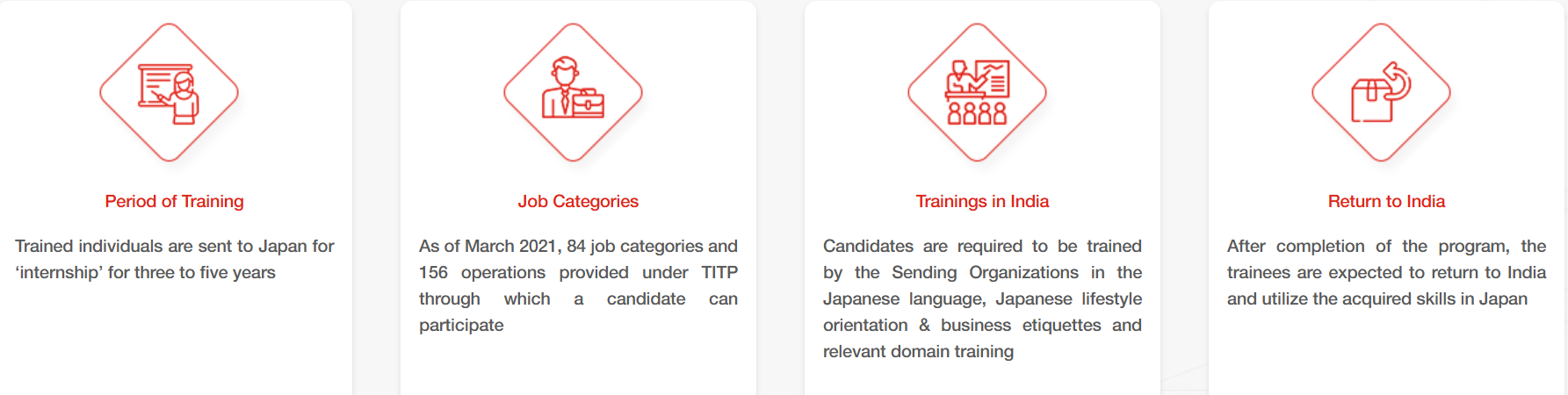
- Period of Training – Trained individuals are sent to Japan for ‘internship’ for three to five years
- Job Categories – As of July 2026, 96 job categories and 174 operations provided under TITP through which a candidate can participate
- Trainings in India – Candidates are required to be trained by the Sending Organizations in the Japanese language, Japanese lifestyle orientation & business etiquettes and relevant domain training
- Return to India – After completion of the program, the trainees are expected to return to India and utilize the acquired skills in Japan
TITP Updates:
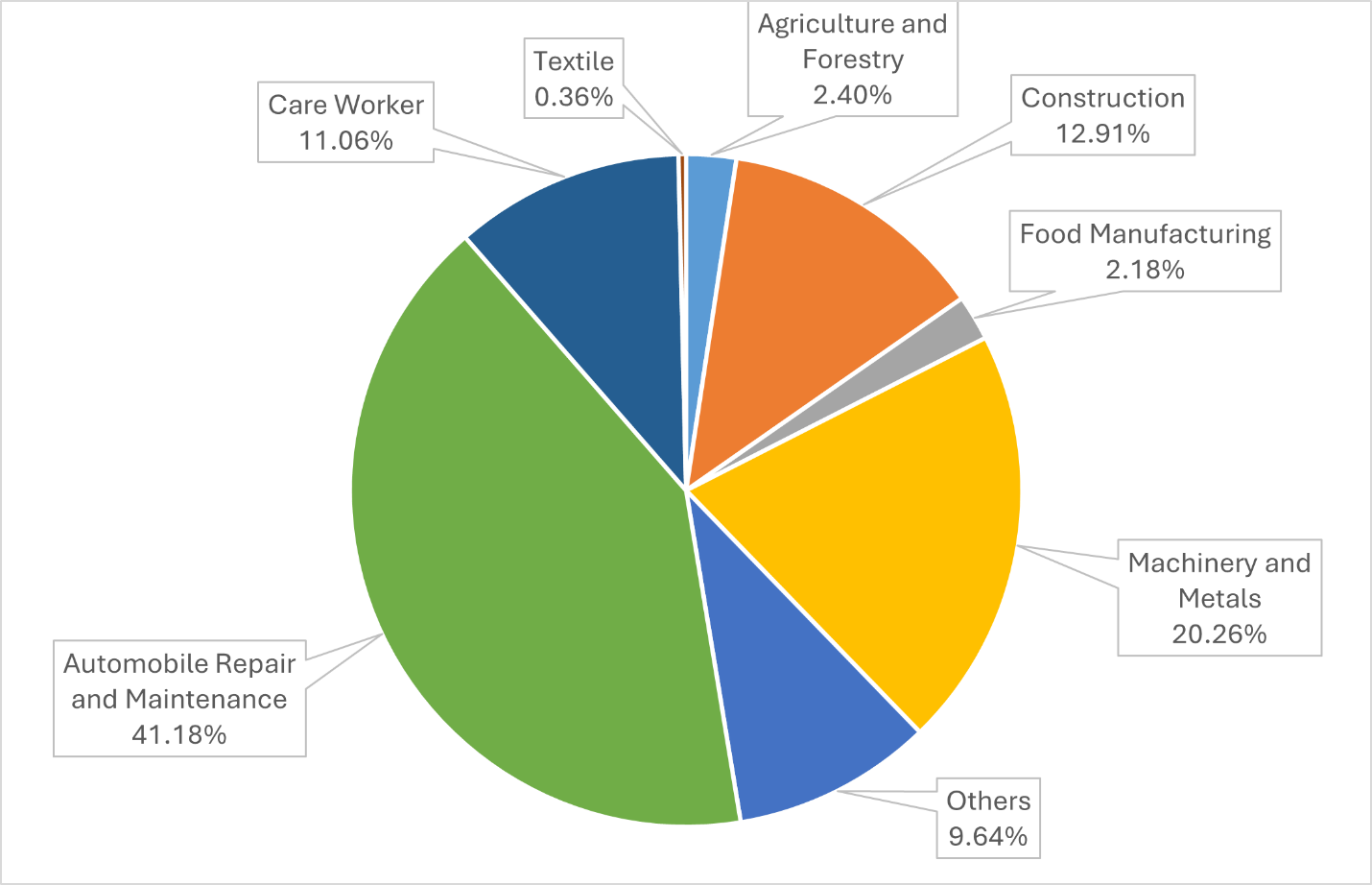
“2680 Indian interns sent to Japan in Automobile, Machinery, Construction, Care Worker, Agriculture, Food Manufacturing, Textile, and Other sectors as on end of December 2025”
What is a Sending Organization?
Qualified and motivated young individuals who seek to enhance their technical skills through the Technical Intern Training Program (TITP) in Japan are selected and prepared in India by Sending Organizations. These organizations identify candidates based on specified eligibility criteria and provide them with pre-departure training in Japanese language, culture, and business etiquette. Sending Organizations are tasked with adequately preparing candidates to meet the requirements of companies in Japan. For a comprehensive understanding of the roles and responsibilities of Sending Organizations, please refer to the TITP Guidelines.
List of empaneled TITP Sending Organizations
TITP Guidelines:
NSDC has released the TITP Guidelines mandatory to be followed by all Sending Organizations. NSDC will keep updating the same at appropriate time.
Why should you join TITP?
TITP aims to empower the Indian youth by honing their skills and providing career opportunities.
The program is expected to help them contribute to India's economic development with specialized technical skills gained from training in Japanese industries
Financial & Other Benefits:
- Attractive compensation
- Welfare pension after completing training in Japan
- Health insurance in Japan
- Probability to work as a Specified Skilled Worker (SSW) in Japan after completing three years of TITP
- Exposure to Japanese work culture, quality management, and innovation techniques
- Rise in social status on return to India
- Probability of exposure to higher-paying jobs on return to India
- Personality development by interacting with people of various nationalities
- Increase in work productivity upon return to India
For more information/clarification, write to NSDC at nsdcjapanteam@nsdcindia.org
Indiaskills
Overview
Sharing the vision of making young Indians ready for employment, the Skill Impact Bond is the first development impact bond in India dedicated to skills training and job placement. Its objective is to benefit 50,000 young Indians over four years, with 60% of the beneficiaries being women. This innovative outcomes-based financing tool uses private sector capital and expertise, focusing on job placement and retention rather than merely on training and certification. The collaboration also seeks to enhance India’s technical and vocational education ecosystem through knowledge exchange, data generation, and the mainstreaming of best practices.
NEED (National Entrepreneurs Empowerment Drive)
NEED: A new pathway to entrepreneurship
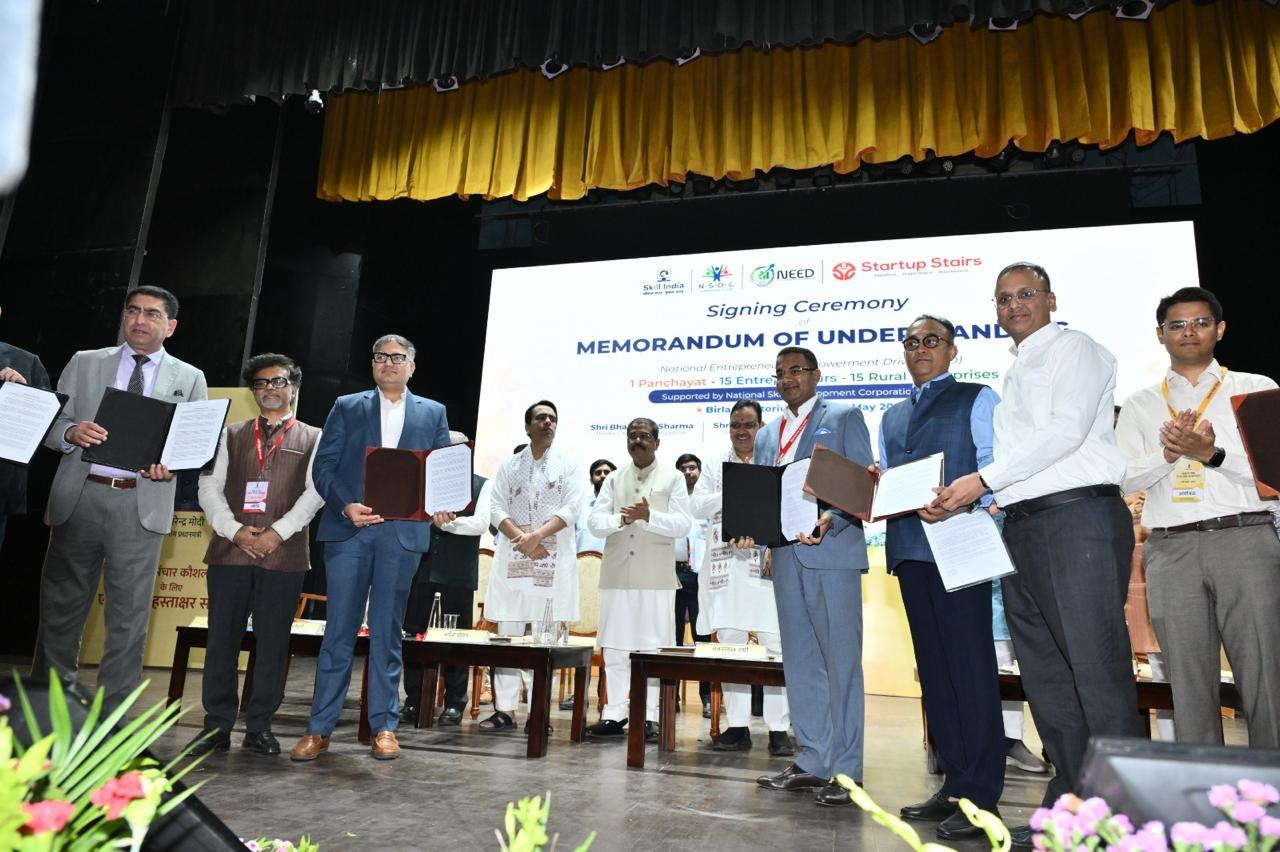
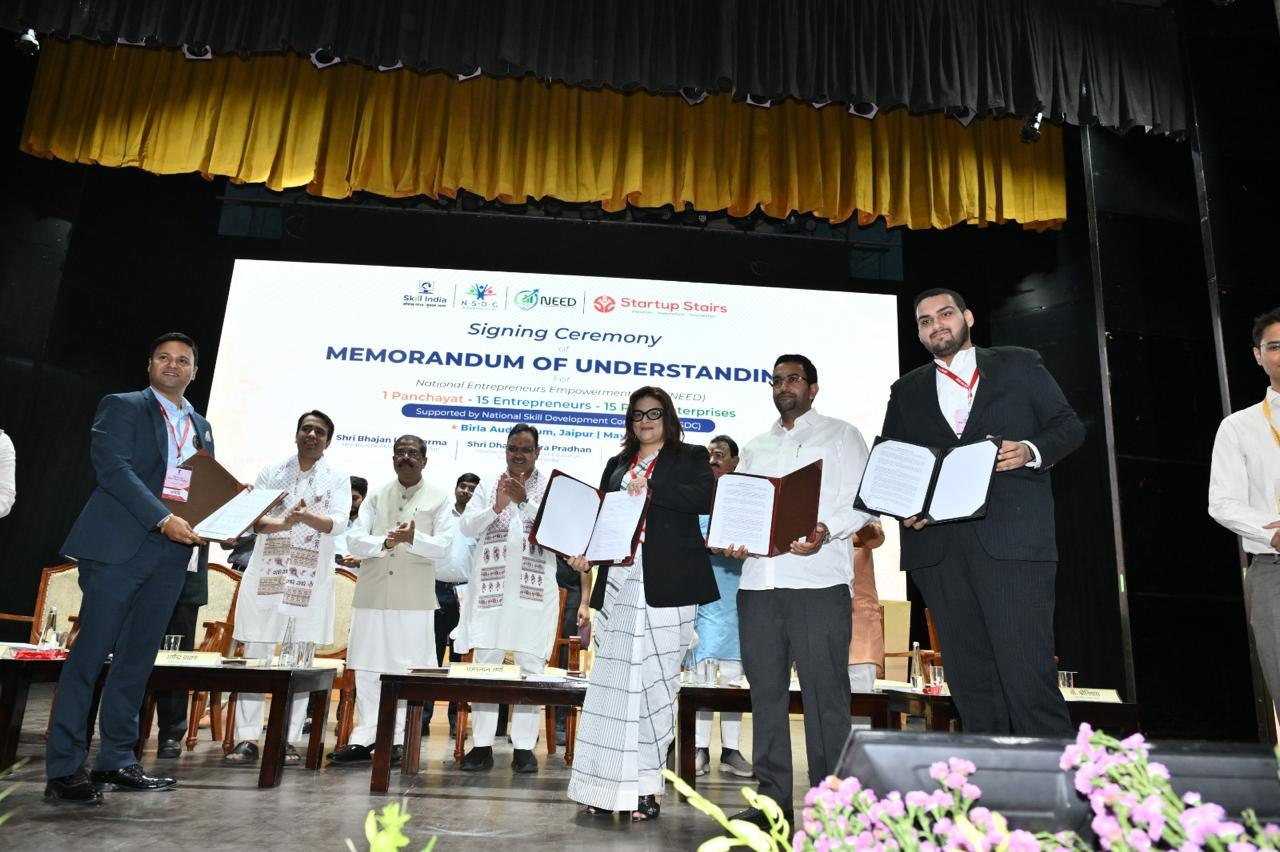
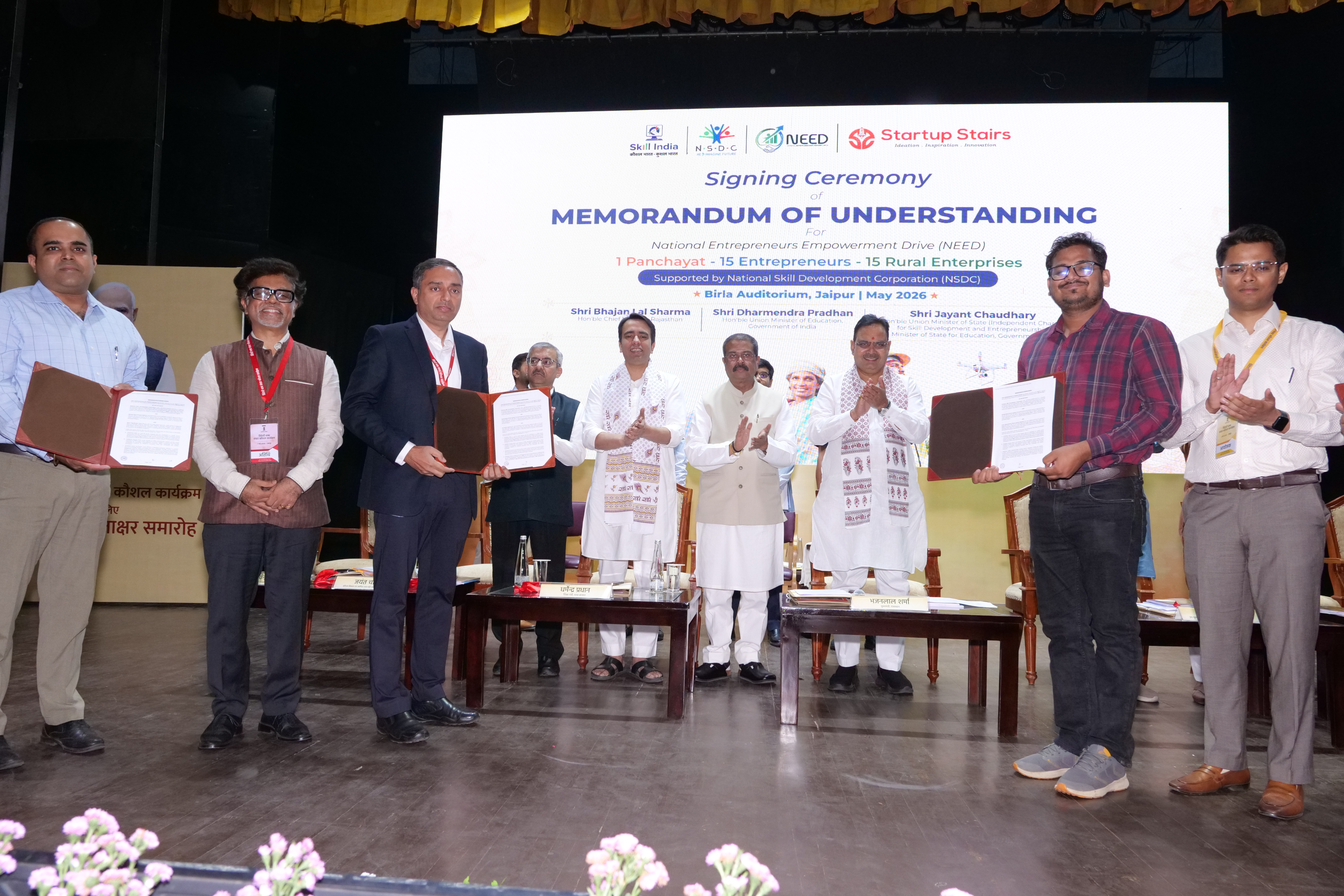
The National Entrepreneurs Empowerment Drive (NEED) is a flagship entrepreneurship initiative of NSDC aimed at transforming skilled and aspiring youth into successful micro-entrepreneurs through a structured, market-linked ecosystem. Designed to nurture a new generation of entrepreneurs, NEED connects aspiring entrepreneurs with industry-led business opportunities, institutional support, and access to formal finance.
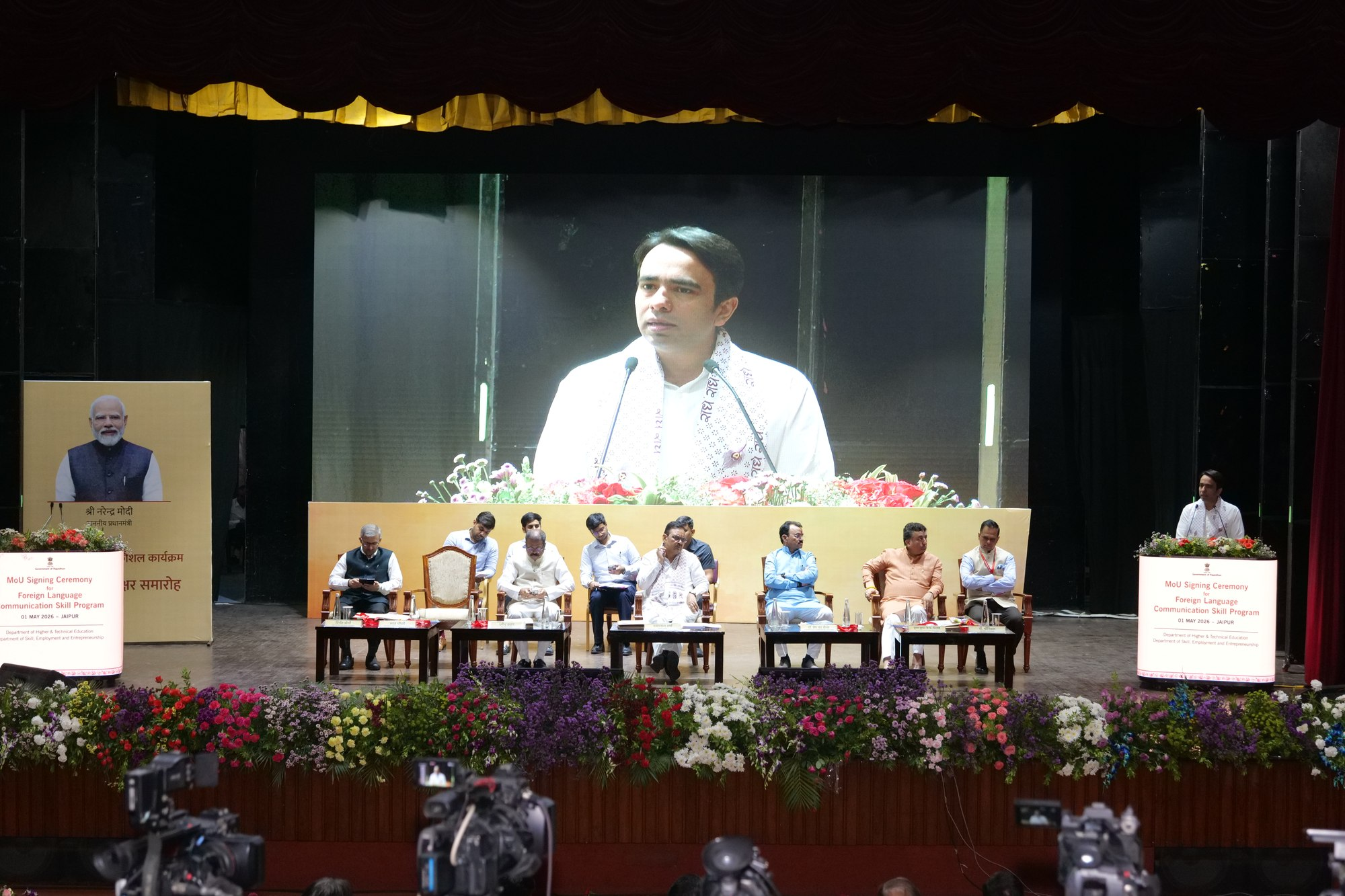
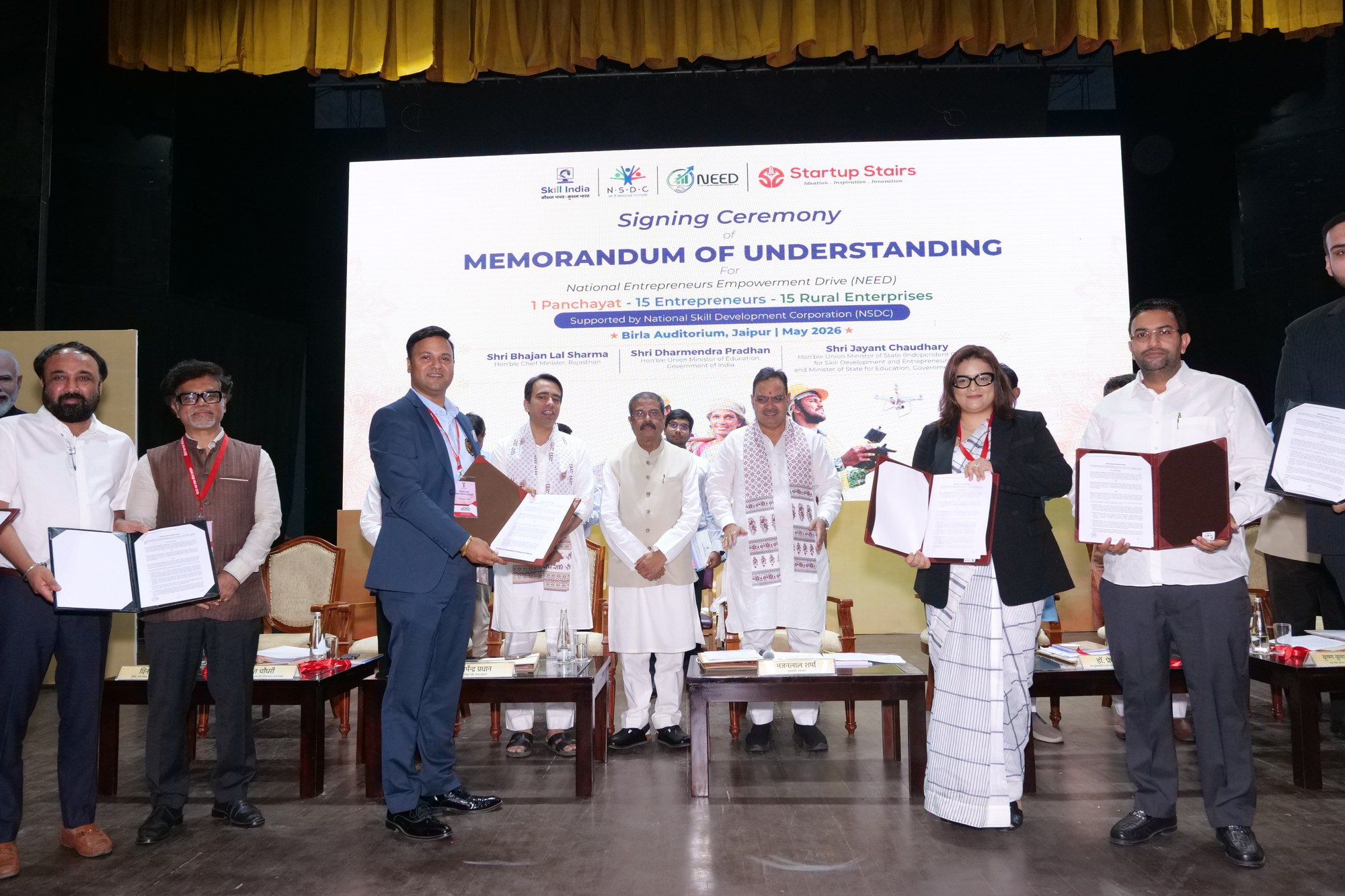
Formally launched by Hon'ble Chief Minister of Rajasthan, Shri Bhajan Lal Sharma, Shri Dharmendra Pradhan, Minister for Education, Govt of India and Shri Jayant Chaudhary, Hon'ble Minister of State (I/C) for Skill Development and Entrepreneurship and Minister of State for Education, Government of India, in Jaipur, on May 1, 2026, NEED is built on a powerful partnership between aspiring youth and Anchor Partners.
At the heart of the initiative are ambitious young entrepreneurs eager to build sustainable livelihoods, supported by established businesses that serve as Anchor Partners. These industry partners play a critical role in turning entrepreneurial aspirations into viable enterprises by providing support to budding entrepreneurs.
Vision behind NEED
The initiative seeks to:
- Bridge the gap between skilling and sustainable income generation.
- Promote entrepreneurship-led livelihood generation across rural and semi-urban India
- Create structured pathways from skilling to enterprise creation
- Provide aspiring entrepreneurs with access to industry-aligned business opportunities
- Facilitate formal credit access through bankable and market-linked business models
- Build a scalable ecosystem that integrates government, industry, financial institutions, and implementation partners
- Strengthen local economies through decentralized enterprise development at the Panchayat level
Why NEED matters
Beyond recognition and reach, a partnership opens access to a suite of practical enablers -each designed to strengthen your programmes and widen the path to a career for every learner you serve.
Anchor Partners
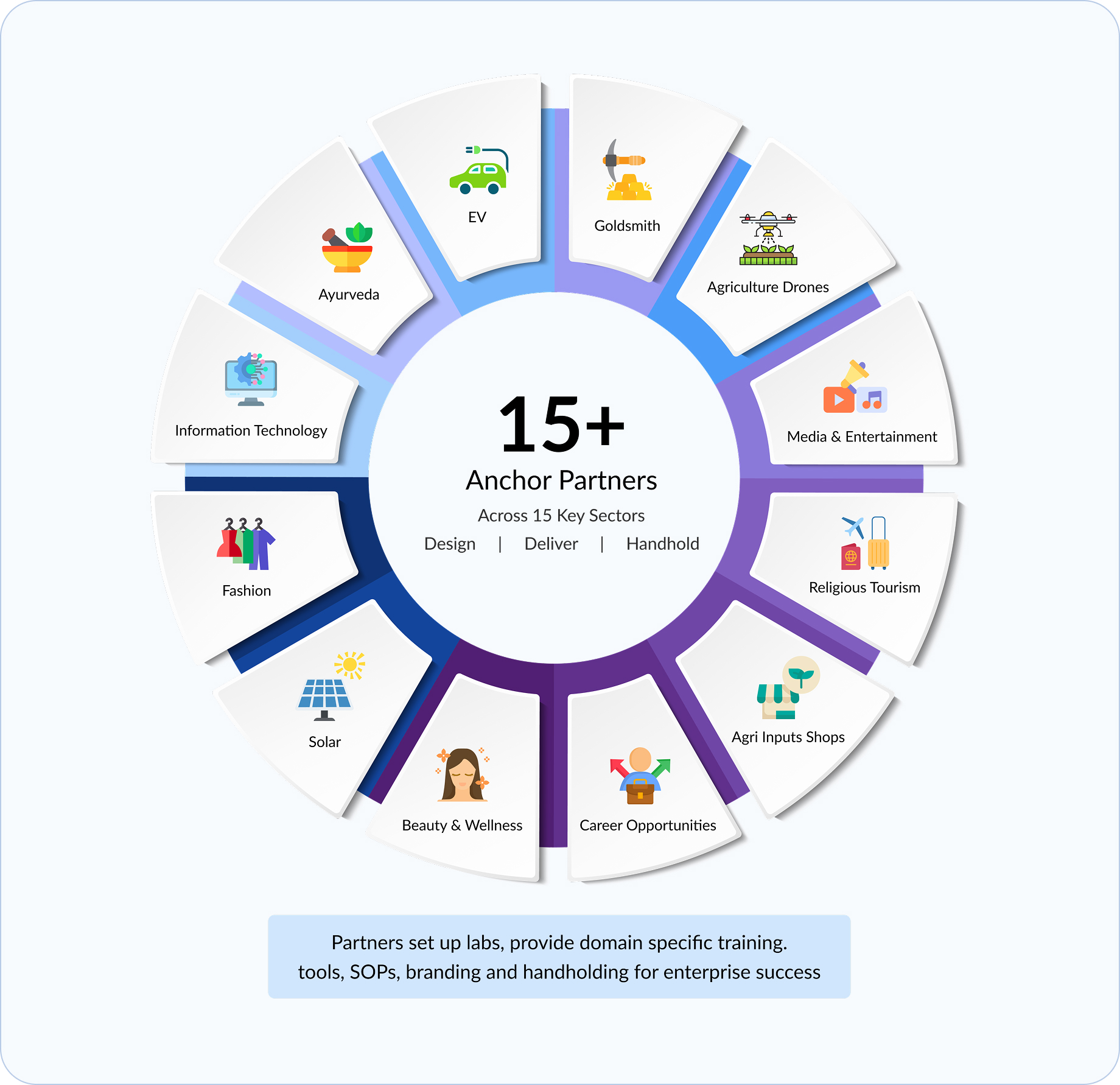
Anchor Partners are established industry players that integrate micro-entrepreneurs into their business ecosystem by providing standardized business models, operational systems, supply chain support, branding, and market access. These partners play a central role in making entrepreneurship more structured, scalable, and sustainable for first-generation entrepreneurs.
Anchor Partners support entrepreneurs not only during training but also throughout the enterprise lifecycle, helping them establish viable and market-connected businesses. Currently, NSDC has onboarded 15+ Anchor Partners.












Anchor Partners (Key Pillars)
Journey from aspiration to enterprise building
NEED follows a structured candidate lifecycle designed to support aspiring entrepreneurs from awareness to enterprise establishment.
- Stage 1: Awareness & Mobilisation
Candidates are identified and mobilised at the Panchayat level - Stage 2: Psychometric Assessment & Profiling
Assessments to evaluate entrepreneurial aptitude, risk appetite, and sector suitability. - Stage 3: Training & Enterprise Readiness
Up to 2-months training on technical, entrepreneurship, and business skills. - Stage 4: Credit Linkage & DPR Facilitation
DPR preparation and loan sanction through partner banks - Stage 5: Enterprise Go-Live & Post-Launch Support
Enterprise setup, handholding, compliance support, and growth enablement
Large Scale Impacts
- Job creators, not job seekers
- Youth empowerment
- Formalization of micro-enterprises
- Access to finance & market
- Long-term handholding for sustainable enterprise creation

Contact
Gallery
PMKVY (Pradhan Mantri Kaushal Vikas Yojana)
The Need for a Skilled India
India is home to one of the world's largest youth populations — a powerful demographic dividend. Rapid
technological change, digital transformation, automation, Industry 4.0 and shifting labour-market demands
have created an urgent need for a workforce equipped with industry-relevant skills. Traditional classroom
education alone can no longer keep pace with employer expectations, which is why competency-based
training, lifelong learning, digital literacy, entrepreneurship and emerging technologies have moved to the
centre of India's skilling agenda.
A skilled workforce is fundamental to sustainable economic growth, higher productivity, stronger
investment inflows and India's positioning as a global talent hub. Under the Skill India Mission and
Atmanirbhar Bharat, the focus has shifted to building a future-ready workforce capable of meeting both
domestic and global employment opportunities.
What is PMKVY?
Pradhan Mantri Kaushal Vikas Yojana (PMKVY) is the flagship, outcome-based skill-training scheme of the
Ministry of Skill Development & Entrepreneurship (MSDE), implemented under Skill India through the
National Skill Development Corporation (NSDC). It is India's largest skill-certification scheme, designed to
mobilise large numbers of Indian youth into outcome-based skill training so that they become employable
and can earn a sustainable livelihood.
The scheme was launched by the Prime Minister on 15th July 2015 — World Youth Skills Day — with the
ambition of skilling one crore (10 million) youth across the country. PMKVY equips candidates trained at
state-of-the-art centres, at home, or under master craftspersons, to meet the needs of international
markets, national industry and rural livelihoods alike, marking the first major step towards making India the
skill capital of the world.
Evolution of the Scheme
- PMKVY 2015–16
The pilot phase that established the outcome-based training and certification model. - PMKVY 2016–2020
A modified, improved version with stronger quality parameters; approved by the Union Cabinet on 15th July 2016 with a budgetary outlay of INR 12,000 crore, to be implemented jointly by the Centre and States through Centrally-Sponsored Centrally-Managed (CSCM) and Centrally-Sponsored State-Managed (CSSM) components. - PMKVY 3.0 (2020–2022)
Introduced district-level skilling plans and stronger convergence with State Skill Development Missions. - PMKVY 4.0 (launched 2023)
The current phase, emphasising industry alignment, technology-enabled delivery, future skills and outcome-based implementation.
PMKVY 4.0 — The Current Phase
PMKVY 4.0 is the latest phase of the Government of India's flagship skilling scheme, implemented by MSDE
through NSDC. It delivers industry-aligned, demand-driven and technology-enabled skill development
opportunities to India's youth, strengthening employability, entrepreneurship and career progression.
Launched in 2023 with an emphasis on quality, flexibility and outcome-based skilling, PMKVY 4.0 aligns
training with the needs of modern industry while promoting lifelong learning. The scheme integrates digital
technologies, blended learning, on-the-job training and stronger industry partnerships so that candidates
graduate with practical, job-ready skills.
Training is offered across both traditional sectors and emerging fields such as Artificial Intelligence, Robotics,
Internet of Things (IoT), Coding, Drones, 3D Printing, Electric Vehicles, Green Jobs, Semiconductor
Manufacturing, Data Analytics and Cybersecurity.
Key Objectives
- Provide industry-relevant, competency-based skill training to youth.
- Enhance employability through demand-driven, placement-oriented training.
- Promote entrepreneurship and self-employment opportunities.
- Strengthen industry participation in curriculum design, delivery and assessment.
- Expand access through digital platforms, blended learning and flexible models.
- Enable Recognition of Prior Learning (RPL) for experienced workers.
- Support inclusion — women, disadvantaged groups and underserved regions.
- Align skilling with the National Education Policy (NEP) 2020 and the National Credit Framework (NCrF).
- Industry-led curriculum aligned to National Occupational Standards (NOS).
- Strong focus on emerging technologies and future skills.
- Digital and blended learning through the Skill India Digital ecosystem.
- On-the-Job Training (OJT) and apprenticeship integration wherever applicable.
- Quality-assured training centres and standardised assessments.
- Digital certification with verifiable credentials.
- Greater convergence with government, education and industry stakeholders.
- Data-driven monitoring, candidate tracking and outcome-based implementation.
- Dedicated entrepreneurship promotion and career-guidance services.
Training Pathways under PMKVY 4.0
PMKVY 4.0 offers candidates three distinct pathways into skilled employment — each designed for a
different starting point, from first-time learners to experienced workers and special target groups.
Short-Term Training (STT)
Structured, industry-aligned training delivered to unemployed youth and school/college dropouts, opening
pathways to both wage and self-employment. Courses are NSQF-aligned and typically run 300–600 hours,
with longer durations offered where industry or sectoral demand requires it. Training is delivered through
accredited and affiliated training centres, and On-the-Job Training (OJT) is a mandatory component as
required by NCVET, with duration depending on the job role.
Recognition of Prior Learning (RPL)
RPL certifies the skills of individuals who have already acquired competencies through informal learning or
hands-on work experience. Following due assessment, candidates receive industry-relevant certification;
those wishing to upskill can undertake additional coursework to qualify for certification at a higher level.
Special Projects
Project-based, short-term skilling initiatives that respond to the needs of marginalised and vulnerable
groups, difficult geographies, and specialised training requirements that fall outside the scope of regular
short-term programmes. Special Projects may also target new-age job roles built around future skills, and
can be residential or non-residential, with certain exemptions available subject to Executive Committee
approval.
Training Workflow
While each pathway has its own detailed process, candidates typically move through the following broad
stages from enrolment to placement.
Key Benefits to Trainees
PMKVY 4.0 is designed to remove financial and logistical barriers to skilling, particularly for women, persons
with disabilities and candidates from underserved regions.
Free Skill Training: Candidates receive industry-relevant skill training at no cost; all training expenses are borne
by the scheme.
Free Assessment & Certification: Candidates are assessed by authorised Sector Skill Councils (SSCs) and receive
nationally recognised certification on successful completion.
Free Uniform & Induction Kit: Every candidate is provided a uniform and induction kit to support effective
participation in training.
Boarding & Lodging Support: Residential facilities are provided for women, Persons with Disabilities (PwDs),
candidates from Special Areas under Common Norms, candidates in Aspirational, Border, Tribal-dominated and
LWE-affected districts (where applicable), and participants in Special Projects requiring residential training.
Conveyance / Transportation Assistance: Women and PwDs attending non-residential training receive
transportation support as per Common Norms, reducing travel-related financial barriers.
Additional Support for PwDs: PwD candidates receive additional financial assistance of ₹5,000 towards assistive
devices, aids and appliances.
Accidental Insurance Coverage: All candidates are covered under accidental insurance for one year during the
training period.
Digital Biometric Attendance: Attendance is recorded via the Aadhaar Enabled Biometric Attendance System
(AEBAS), ensuring transparency.
Post-Certification Tracking: Certified candidates continue to be tracked to monitor employment and career
progression, helping assess training outcomes.
Major Improvements in PMKVY 4.0
| Area | PMKVY 4.0 |
|---|---|
| Training Approach | Demand-driven and industry-led |
| Learning Mode | Blended learning with digital integration |
| Technology Focus | AI, Robotics, IoT, Drones, EVs, Green Jobs, Semiconductor, Data Analytics, Cybersecurity |
| Assessment | Competency-based with standardised quality assurance |
| Certification | Digital certificates integrated with Skill India Digital |
| Industry Engagement | Strong employer participation in training and placements |
| Monitoring | Technology-enabled real-time monitoring and analytics |
| Career Support | Career counselling, placement facilitation and entrepreneurship support |
Fund Allocation & Payout Tranches
Payout Tranches — STT / Special Projects (current structure)
| Tranche | % of Base Cost | Output Parameter |
|---|---|---|
| 1 | 30% | On the batch achieving 70% attendance at least once within the first 20 days |
| 2 | 30% | On the batch achieving 70% AEBAS attendance (at least once) and completing 50% of training |
| 3 | 40% | On certification of passed candidates only |
Payout Tranches — RPL
| Tranche | % of Base Cost | Output Parameter |
|---|---|---|
| 1 | 80% | On successful certification of the candidate |
| 2 | 20% | On submission/uploading of the Monthly Performance Report (MPR) and proof of certificate handover |
Useful Links & Resources
- Official PMKVY portal: https://www.skillindiadigital.gov.in/user-manuals
- Skill India Digital user manuals: https://www.skillindiadigital.gov.in/user-manuals
For implementation queries, candidates and partners may reach out to the National Skill Development
Corporation (NSDC) through the official PMKVY and Skill India Digital channels for the latest contact details.
PM Vishwakarma
Key Indicators




Benefits under PM Vishwakarma Scheme
- Recognition
- Recognition as a Vishwakarma through a Certificate and ID Card.
- Skilling
- Skill Verification followed by 5–7 days (40 hours) of Basic Training.
- Interested candidates can also enroll for 15 days (120 hours) of Advanced Training.
- Training stipend of ₹500 per day.
- Toolkit Incentive
- Toolkit incentive grant of ₹15,000.
- Credit Support
- Collateral-free Enterprise Development Loans:
- ₹1 lakh (First Tranche with 18 months repayment).
- ₹2 lakh (Second Tranche with 30 months repayment).
- Concessional rate of interest of 5% for beneficiaries, with an Interest Subvention cap of 8% borne by the Ministry of MSME.
- Credit Guarantee fees to be borne by the Government of India.
- Collateral-free Enterprise Development Loans:
- Incentive for Digital Transactions
- ₹1 per transaction for up to 100 transactions per month.
- Marketing Support
- The National Committee for Marketing (NCM) will provide support including:
- Quality Certification
- Branding & Promotion
- E-commerce Linkages
- Trade Fairs
- Advertising & Publicity
- Other Marketing Activities
- The National Committee for Marketing (NCM) will provide support including:


- An artisan or craftsperson working with hands and tools and engaged in one of the 18 family-based traditional trades mentioned in the scheme, in unorganized sector on self-employment basis, shall be eligible for registration under PM Vishwakarma.
- The minimum age of the beneficiary should be 18 years on the date of registration.
- The beneficiary should be engaged in the concerned trade on the date of registration and should not have availed loans under similar credit-based schemes of Central Government or State Government for self-employment/business development, e.g. PMEGP, PM SVANidhi, Mudra, in the past 5 years.
- The registration and benefits under the Scheme shall be restricted to one member of the family. For availing benefits under the Scheme, a ‘family’ is defined as consisting of the husband, wife and unmarried children.
- A person in government service and their family members shall not be eligible under the Scheme.


PM Vishwakarma is a new scheme and envisages to provide end-to-end holistic support to the traditional artisans and craftspeople in scaling up of their conventional products and services. The objectives of the scheme are as given below:
- To enable the recognition of artisans and craftspeople as Vishwakarma making them eligible to avail all the benefits under the Scheme.
- To provide skill upgradation to hone their skills and make relevant and suitable training opportunities available to them.
- To provide support for better and modern tools to enhance their capability, productivity, and quality of products.
- To provide the intended beneficiaries an easy access to collateral free credit and reduce the cost of credit by providing interest subvention.
- To provide incentives for digital transaction to encourage the digital empowerment of these Vishwakarmas.
- To provide a platform for brand promotion and market linkages to help them access new opportunities for growth.
Resource & User Manual for Training Partners & Training Centers
PM-NAPS (Pradhan Mantri National Apprenticeship Promotion Scheme)
Overview
The National Apprenticeship Promotion Scheme (PM-NAPS) is a government initiative in India that incentivizes establishments to hire apprentices under the Apprentices Act, 1961. It aims to promote on-the-job training and skill development, providing financial support to both employers and apprentices.
Why PM-NAPS?
PM-NAPS is the Government of India’s flagship initiative to institutionalize apprenticeships as a mainstream career pathway — blending learning with earning. With a sharp focus on job-readiness and industry-aligned skilling, NSDC, through PM-NAPS, enables both youth empowerment and industrial productivity.
Key Impact Highlights
- 38 lakh+ Apprentices Engaged
- 50,000+ Employers Participating Across Sectors
- ₹980 crore+ Disbursed via Direct Benefit Transfer
- 169 Third-Party Aggregators Empanelled
- 700+ Industry-Relevant Apprenticeship Courses
- 92% CAGR in Apprentice Engagement
- 32% CAGR in Establishments Participating
- 45% Apprentices from Diverse Socio-Economic Backgrounds
- 21% Women Apprentices Engaged
- 35 lakh e-KYC Verifications
- 30 lakh Aadhaar-Based Beneficiary IDs Generated
Prominent Employers Onboard: Mahindra, Dixon, Toyota, Apollo Pharmacy, Maruti Suzuki, Aditya Birla, Reliance, Barbeque Nation — and many more!
Our Key Offerings
- Industry Engagement & Enablement
- End-to-end onboarding and handholding of establishments
- Customised apprenticeship frameworks aligned to business needs
- Access to a nationwide talent pool
- Regulatory compliance and operational support
Promotion of Apprenticeship Opportunities
- Nationwide awareness campaigns, Apprenticeship Melas & Rozgar Melas
- Partnerships with SSCs, TPAs, and industry bodies
- Success stories and best practices from the field
- Promoting Apprenticeship with schools and colleges
Financial Incentive Support
- Direct Benefit Transfer (DBT) to apprentices up to 1500 rupees per month
- Transparent, timely fund tracking via digital platform
Digital Infrastructure & Platform Management
- Unified Apprenticeship Portal for real-time operations
- Features: Online registration, contracts, analytics dashboard, Aadhaar-PFMS integration
Capacity Building & Stakeholder Support
- Training for establishments, candidates & intermediaries
- Knowledge sessions, policy guidance, SOPs & grievance redressal
Transforming India’s Skilling Landscape
From urban metros to rural towns, PM-NAPS is building a future-ready India — one apprentice at a time. By bridging the gap between education and employment, PM-NAPS is reshaping industry-academia linkages, enhancing productivity, and catalyzing inclusive growth.
Ready to Join the Apprenticeship journey?
NGHM (National Green Hydrogen Mission)
About National Green Hydrogen Mission
The National Green Hydrogen Mission is a Government of India initiative aimed at positioning India as a global hub for the production, utilization, and export of Green Hydrogen and its derivatives. The mission seeks to accelerate clean energy transition, strengthen energy security, reduce dependence on fossil fuel imports, and create large-scale employment opportunities across emerging green industries. The Mission targets the development of a robust green hydrogen ecosystem supported by innovation, manufacturing, infrastructure, and skills development. [pib.gov.in], [bioenergytimes.com]
NSDC as Principal Implementing Agency
As the Principal Implementing Agency for the skill development component of the
National Green Hydrogen Mission, NSDC works on the following scheme objectives:
Skill Gap Analysis Undertake comprehensive skill gap analysis covering key areas of the green hydrogen ecosystem on a continuous basis to identify emerging workforce needs. | Registry of Skills Create and update a registry of skills required by the green hydrogen value chain, ensuring alignment with industry demands. | Curriculum Development Design and develop curricular elements for use in Schools, ITIs, Polytechnics, and HEIs at various levels and segments of the green hydrogen value chain. |
Qualification Packs Develop Qualification Packs (QPs) and training content including training manuals and online study resources for green hydrogen and allied sectors. | Certified Trainers Create a certified pool of trainers across the green hydrogen value chain to ensure quality training delivery. | Private Sector Participation Encourage private sector participation with greater focus on RPL training in industries and On-the-Job Training (OJT). |
Infrastructure Utilization Enable cross-utilization of available infrastructure at Schools, HEIs, and government institutions for delivery of skill training. | Training Partner Selection Lay down criteria and mechanism for selection and monitoring of Training Partners who would deliver the skilling courses. | Learner-Centric Programs Implement learner-centric training programs to train and certify participants on approved courses, including all components of training and placement tracking. |
RPL Pilot Impact
Individuals Trained: 1200+
Candidates Certified: 1100+
QPs Developed: 43
Trainers Certified: 403
SIICs (Skill India International Centres)
About Skills India International Centres (SIICs)
Skill India International Centres (SIICs) are a strategic initiative of the National Skill Development
Corporation (NSDC) and NSDC International, advancing the Government of India’s vision of India as the
Skill Capital of the World.
Each SIIC is an integrated hub for high-quality skill development: training, assessment and certification
aligned with international standards. By combining industry-relevant training with language proficiency
and preparatory support, SIICs equip Indian youth with the competencies that global workplaces demand.
The goal is a structured, credible ecosystem where Indian skilled professionals are better recognised and
accepted across global markets, and where every candidate is supported with transparency, ethical
practice and informed choices.
| S. No. | SIIC Centre Name | Centre Email Id | Centre Address |
|---|---|---|---|
| 1 | Varanasi | siic_varanasi@nsdcindia.org | SIIC Varanasi, ITI karaundi, Near BHU Hyderabad Gate, Uttar Pradesh - 221005 |
| 2 | Bhubaneswar | siic.bhubaneswar@nsdcindia.org | SIIC Bhubaneswar, Skill development Institute, P.S. Jatni, Taraboi, Bhubaneswar, Dist - Khordha - 752050 |
| 3 | Kanpur | siic.kanpur@nsdcindia.org | SIIC Kanpur, NSTI Campus, CTI Chauraha - 208022 |
| 4 | Ludhiana | siic.ludhiana@nsdcindia.org | SIIC Ludhiana, NSTI Campus, Gill Road - 141003 |
| 5 | Hyderabad | siic.hyderabad@nsdcindia.org | SIIC - NSTI Vidyanagar Campus, Hyderabad - 500007 |
| 6 | Bangalore | siic.bengaluru@nsdcindia.org | SIIC Bangalore, NSTI Yeshwanthpur -560022 |
| 7 | Guwahati | siic.guwahati@nsdcindia.org | SIIC Guwahati, IIE Lalmati - 781029 |
Role of SIICs
SIICs strengthen India’s global skilling ecosystem by acting as enablers of high-quality training and
certification. Their core functions include:
- Industry-aligned training: Programmes mapped to international standards and employer
requirements - Assessment and certification: Assessments through credible certification frameworks that carry
global recognition - Holistic employability preparation: Soft skills, language training and workplace-readiness modules
that build candidate confidence and adaptability - Awareness and guidance: Informed career counselling and guidance on safe, legal and ethical
processes for candidates - A trusted skilling ecosystem: Partnerships with industry, training providers and international
stakeholders to ensure quality outcomes - End-to-end integrated support to candidates: Support across training, certification, documentation
and post-placement guidance.
Objective
To position India as the Skill Capital of the World by creating a globally trusted, high-quality skilled
workforce equipped with internationally benchmarked competencies, certifications and professional
readiness.
- Equip Indian youth with industry-aligned skills, language proficiency, internationally relevant
certification and workplace readiness - Open ethical, transparent and well-informed pathways to global career opportunities
- Build strong partnerships with global industry and institutions that win recognition for Indian skills and
strengthen India’s standing as a source of competent, future-ready talent.