What is Technical Intern Training Program (TITP)?
The Technical Intern Training Program (TITP) was initiated in Japan back in 1993 with the aim of supporting developing countries by hosting their citizens and imparting skills through On-the-Job Training (OJT). This program serves as a platform for international cooperation, facilitating the transfer of skills, techniques, and knowledge gained by technical interns to their home countries. By doing so, it not only enhances human resource development but also contributes to the economic growth of these regions.
In alignment with India's ambition to become the skill capital of the world, the Ministry of Skill Development and Entrepreneurship (MSDE), Government of India, has undertaken various measures to bolster skill development initiatives. One significant step in this direction was the signing of a Memorandum of Cooperation (MoC) with Japan's Ministry of Justice, Ministry of Foreign Affairs, and Ministry of Health, Labour and Welfare on October 17, 2017. This MoC aims to substantially enhance bilateral cooperation between India and Japan in the field of skill development.
Under this collaborative program, individuals from India are selected to undergo internships lasting three to five years in Japan. Upon completion of their internships, they are required to return to India and apply the skills they have acquired during their time in Japan. To oversee the implementation of this program, the MSDE appointed the National Skill Development Corporation (NSDC) in January 2018 to serve as the monitoring body.
Key Features:
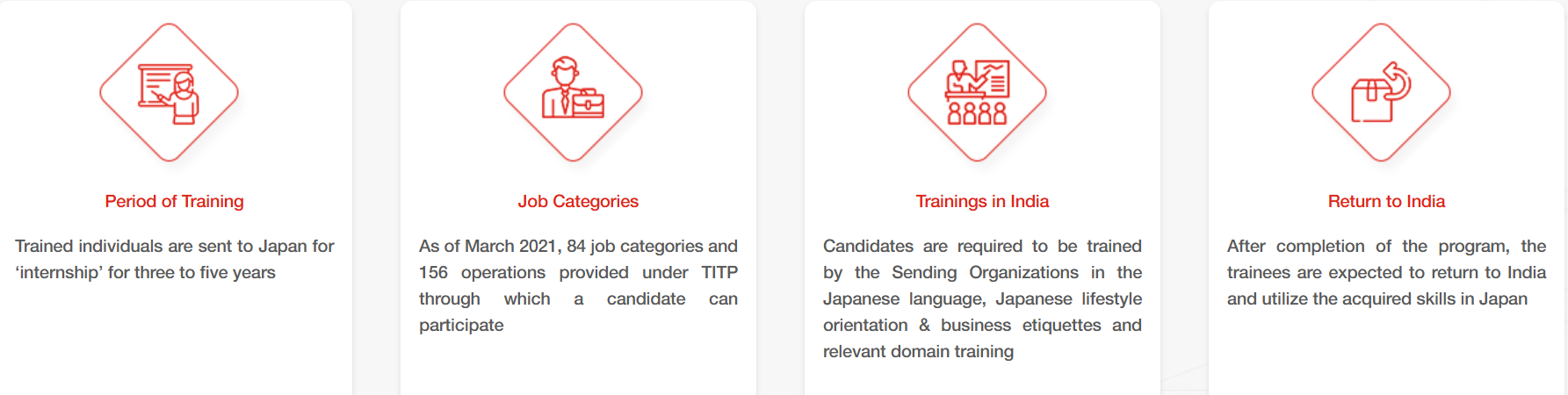
- Period of Training – Trained individuals are sent to Japan for ‘internship’ for three to five years
- Job Categories – As of July 2026, 96 job categories and 174 operations provided under TITP through which a candidate can participate
- Trainings in India – Candidates are required to be trained by the Sending Organizations in the Japanese language, Japanese lifestyle orientation & business etiquettes and relevant domain training
- Return to India – After completion of the program, the trainees are expected to return to India and utilize the acquired skills in Japan
TITP Updates:
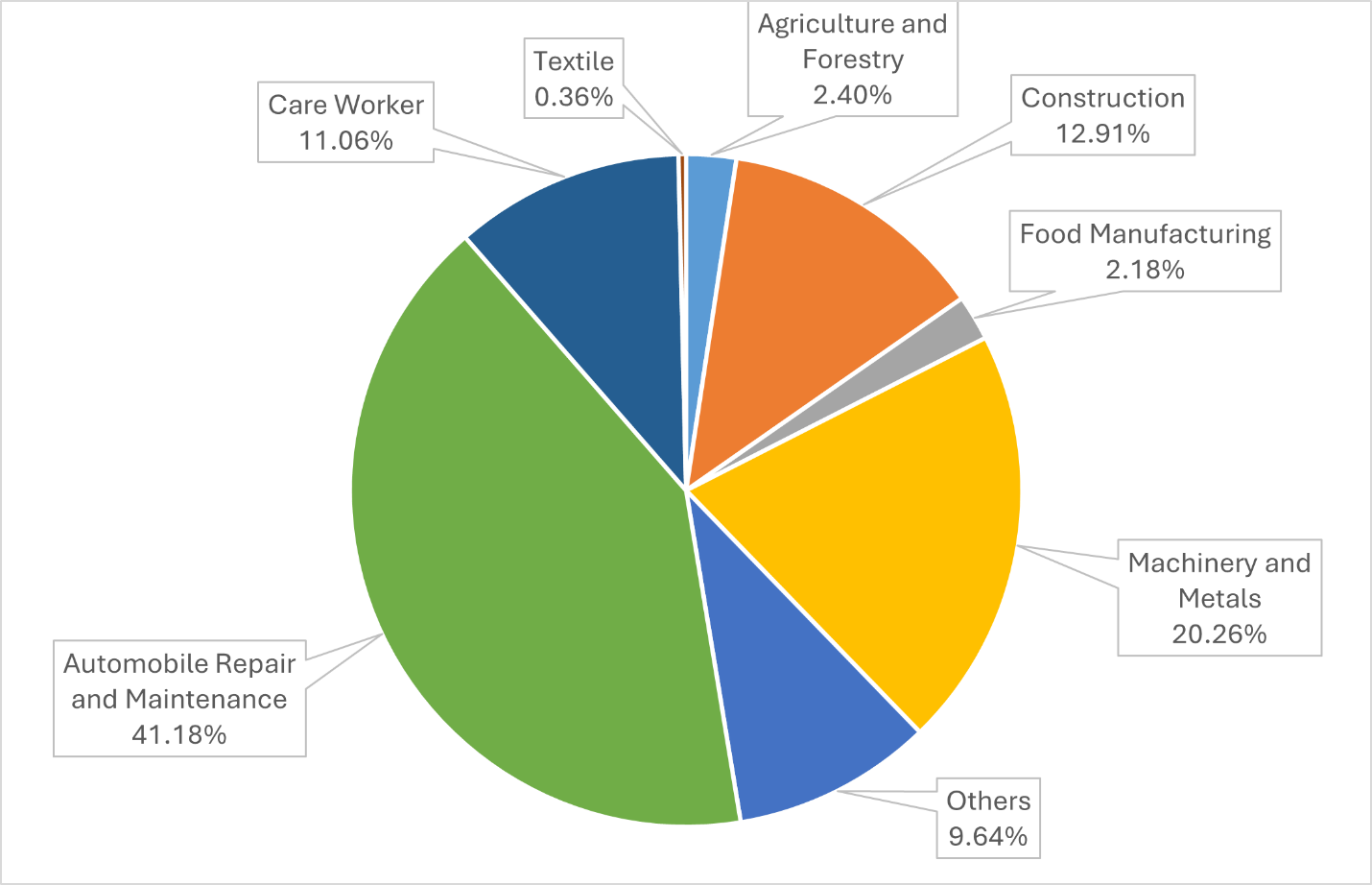
“2680 Indian interns sent to Japan in Automobile, Machinery, Construction, Care Worker, Agriculture, Food Manufacturing, Textile, and Other sectors as on end of December 2025”
What is a Sending Organization?
Qualified and motivated young individuals who seek to enhance their technical skills through the Technical Intern Training Program (TITP) in Japan are selected and prepared in India by Sending Organizations. These organizations identify candidates based on specified eligibility criteria and provide them with pre-departure training in Japanese language, culture, and business etiquette. Sending Organizations are tasked with adequately preparing candidates to meet the requirements of companies in Japan. For a comprehensive understanding of the roles and responsibilities of Sending Organizations, please refer to the TITP Guidelines.
List of empaneled TITP Sending Organizations
TITP Guidelines:
NSDC has released the TITP Guidelines mandatory to be followed by all Sending Organizations. NSDC will keep updating the same at appropriate time.
Why should you join TITP?
TITP aims to empower the Indian youth by honing their skills and providing career opportunities.
The program is expected to help them contribute to India's economic development with specialized technical skills gained from training in Japanese industries
Financial & Other Benefits:
- Attractive compensation
- Welfare pension after completing training in Japan
- Health insurance in Japan
- Probability to work as a Specified Skilled Worker (SSW) in Japan after completing three years of TITP
- Exposure to Japanese work culture, quality management, and innovation techniques
- Rise in social status on return to India
- Probability of exposure to higher-paying jobs on return to India
- Personality development by interacting with people of various nationalities
- Increase in work productivity upon return to India
For more information/clarification, write to NSDC at nsdcjapanteam@nsdcindia.org